


Blast Furnace Steelmaking
13 de February de 2023
Aceros y Servicios at Industry Live 2023
25 de April de 2023
Manufacturing of Steel in Electric Arc Furnace
In the previous post we have seen the steel manufacturing process in a blast furnace. Now let’s see what the process is like using the electric oven.
The raw material in this case is scrap metal, which is introduced into the furnace and melted with the high temperatures generated by sparking a powerful electric arc, between it and the graphite electrodes that are introduced through the lid of the furnace.
During this fusion process, fluxes and slag formers are added.
Once the liquid product is obtained, the refining of the steel begins, eliminating the undesirable elements that accompany the scrap and the impurities inherent to the process. The slag that supernatants the liquid steel fulfills the function of trapping these impurities.
The liquid steel is then transferred to a container where ladle metallurgy is carried out. In this phase, alloying elements are added to adjust the chemical composition of the casting being manufactured and the gas content is reduced.
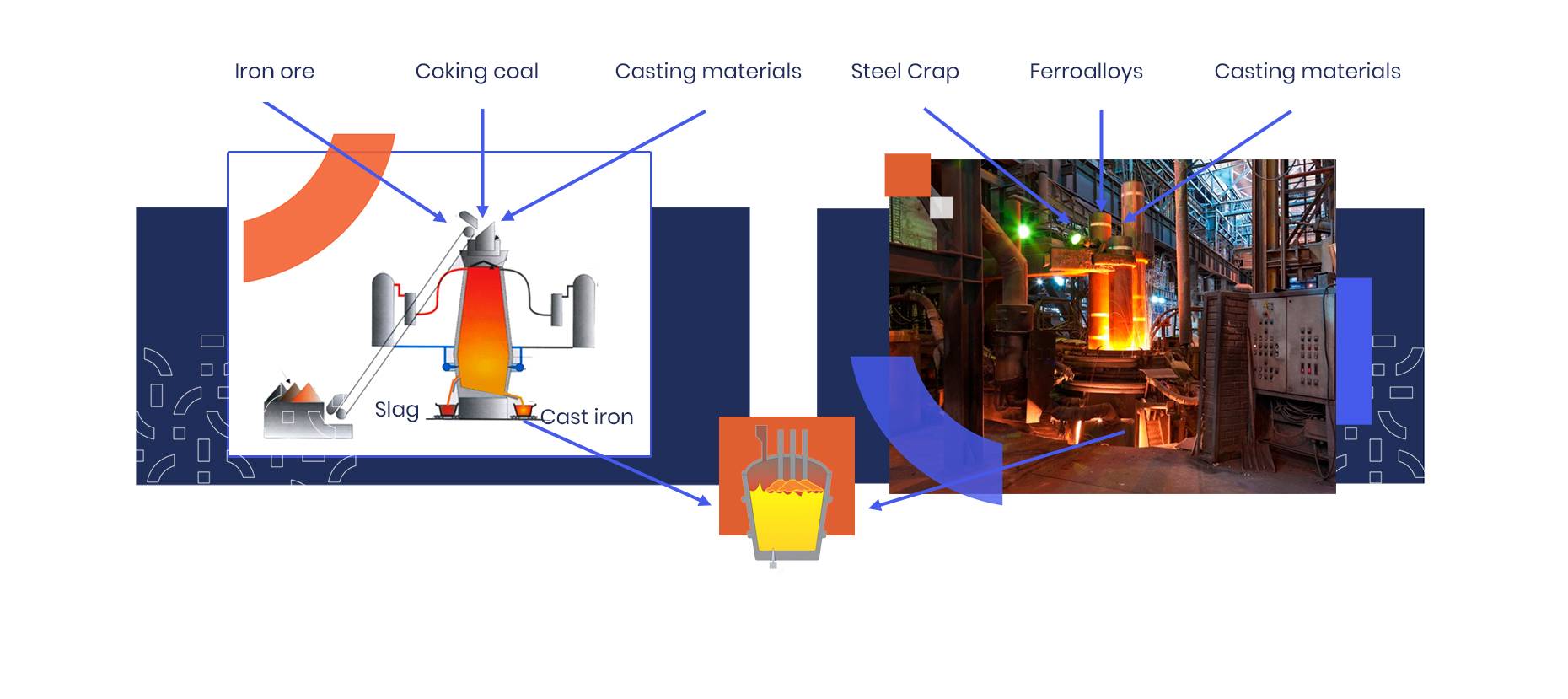
Electric arc furnace scheme
The ecological function that the electric furnace performs with the melting of scrap metal and the ability of steel to be 100% recyclable cannot be overlooked. If these two conditions are not met, pollution from scrap metal would be impressive.
In subsequent posts we will see the solidification and transformation processes until reaching commercial steel products as we know them in industrial practice, when we manufacture parts with high or low mechanical demands. Until the complete steel mill process is carried out, there is no product with the mechanical characteristics and the capacity to be processed that is required of steel.
In the next post we will talk about the next step in steel manufacturing with two solidification processes: continuous casting and ingot casting.
Written by: Iñaki Aldayturriaga


